
 EN
EN



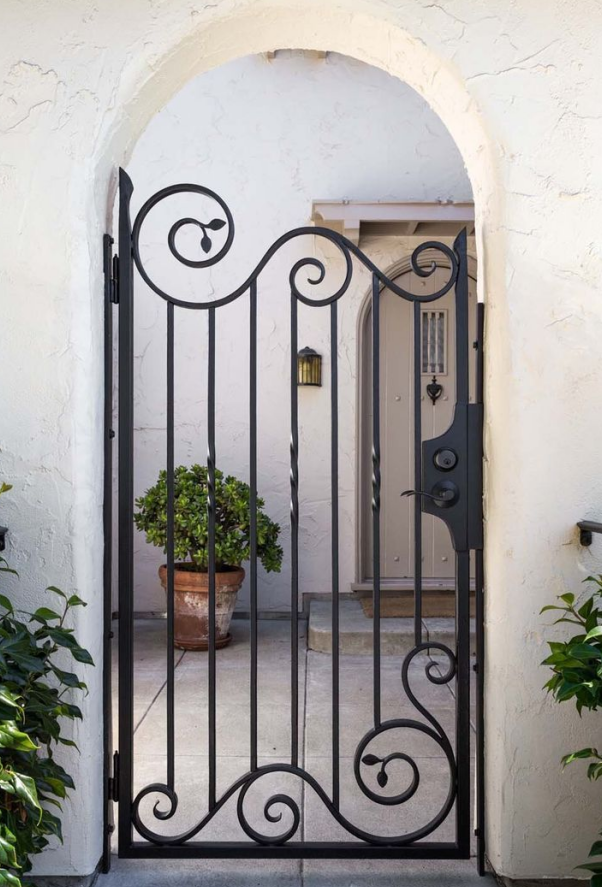
What CE Certification Really Means for Iron Gates Suppliers
Legal Obligation Under EU Construction Products Regulation (CPR)
The CE certification isn't just some optional quality sticker for iron gates sold in the EU market—it's actually required by law. The EU Construction Products Regulation or CPR requires that these gates undergo testing for things like mechanical strength, safety features, and how long they last. This has to be done by a special EU-approved organization. Gate suppliers need to provide what's called a Declaration of Performance document that lists all the important specs that have been tested, things like how much weight the gate can hold, how resistant it is to rust, and whether it maintains its shape over time. If companies don't follow these rules, there are real consequences. Products might get pulled off shelves, imports could be blocked at borders, and companies face penalties amounting to around 4% of their yearly revenue. Think of the CE mark as basically a safety pass for products wanting to enter EU markets. When that mark appears on a gate, it means the product meets certain agreed upon standards. Without it? Well, trying to sell those gates in Europe would be against the law.
EN 13279-1: The Core Standard for Wrought and Cast Iron Gate Performance
EN 13279-1 serves as the main European regulation for wrought and cast iron gates operating under CPR guidelines. The standard sets specific requirements that manufacturers must follow. For example, wrought iron needs a minimum yield strength of at least 200 MPa. Gates also need to withstand 720 hours of salt spray testing according to ISO 9227 standards. Impact resistance gets tested by applying 50 kg force to key joint areas during validation processes. Material tracking remains a major focus point throughout production. From where the raw alloys come from right through to how everything gets assembled, there's strict documentation to stop anyone from using metals that don't meet specifications or recycled materials that might compromise quality. All moving parts have tight dimensional limits too, no more than plus or minus 1.5 mm. This helps avoid common problems on site such as gates getting stuck, parts not lining up properly, or components wearing out faster than expected.
How CE Certification Guarantees Safety and Durability in Iron Gates
Getting CE certification transforms iron gates from just looking good to actually being safety systems that work properly. The process requires third party testing according to set standards like EN 13279-1, EN 13241-1, and EN 12453. This creates a clear line of responsibility all the way through from when someone designs a gate until it gets installed on site. Architects, property developers, and people managing facilities know that going with suppliers who have CE certification means they don’t have to worry so much about whether these gates will hold up under stress, withstand weather conditions over time, or operate safely without failures. It gives them concrete proof of quality exactly where they need it.
Mechanical Strength, Corrosion Resistance, and Impact Safety Benchmarks
CE-certified iron gates undergo three interlocking performance validations:
- Static load testing confirms structural stability under Â1.5 kN/m² pressure—exceeding typical wind-load demands in most EU climatic zones;
- Corrosion resistance is verified via 1,000-hour salt-spray exposure (ISO 9227), simulating over a decade of coastal or de-icing salt exposure without coating breakdown or base-metal degradation;
- Impact safety is quantified through pendulum tests measuring energy absorption capacity (minimum 50 Joules), ensuring hinges, latches, and frames resist deformation during accidental collisions.
Production adheres to ±0.5 mm thickness tolerances across load-bearing sections—a precision threshold identified in Structural Safety Journal (2024) as critical for preventing fatigue-related failures, which account for 74% of field-reported gate malfunctions.
Critical Safety Compliance for Automated Iron Gates (EN 13241-1 & EN 12453)
Automation introduces distinct hazard profiles—requiring dedicated compliance under EN 13241-1 (doors and gates) and EN 12453 (safety in power-operated doors). These standards mandate:
- Force limitation with obstruction detection sensitivity below 150 N;
- Anti-shearing geometry, including Â25 mm clearance in all pinch points;
- Emergency reversal activation within 0.3 seconds of contact;
- Fail-safe manual override accessible without tools during power loss.
Ongoing conformance is verified through periodic audits incorporating dynamic pressure mapping—ensuring distributed force never exceeds 40 N/cm², even at maximum speed. According to the European Injury Prevention Bureau (2023), this layered, standards-driven approach reduces automated gate injuries by 91% compared to uncertified installations.
How to Verify Genuine CE Certification in Iron Gates Suppliers
Validating the Declaration of Performance (DoP) and Notified Body Involvement
The Declaration of Performance (DoP) is the cornerstone legal document—never accept verbal assurances or generic “CE compliant” claims. A valid DoP must:
- Be signed by the manufacturer or authorized EU representative;
- Reference specific harmonized standards applied (e.g., EN 13279-1, EN 13241-1);
- List test results for declared performance characteristics (e.g., load resistance, corrosion class);
- Include the official identification number of an EU-notified body that performed or supervised conformity assessment.
Counterfeit DoPs surged 78% across construction products since 2021 (EU Safety Gate), making independent verification essential. Always cross-check the notified body’s ID in the European Commission’s NANDO database—only entries explicitly listing “iron gates” under CPR scope are valid for this product category.
Using NANDO Database and EU Market Surveillance Red Flags
Use the NANDO database to confirm the notified body’s active accreditation for iron gates under CPR Annex V or VI modules. Red flags demanding immediate scrutiny include:
- Missing or inconsistent DoP traceability codes (e.g., no unique batch or serial reference);
- Suppliers claiming “self-certification” for automated systems—EN 12453 requires mandatory third-party involvement;
- Absence of test reports referenced in the DoP or discrepancies between claimed performance and standard thresholds (e.g., citing “EN 13241-1” but omitting force-limitation validation).
Since 2023, penalties for fraudulent CE marking exceed €40,000 per violation. Prioritize suppliers who publish their DoP online with a direct, verifiable link to a NANDO-listed notified body—this transparency significantly reduces procurement risk and liability exposure.
Strategic Advantages of Partnering with CE Certified Iron Gates Suppliers
Working with suppliers who have CE certification for iron gates brings real strategic advantages that go well beyond just meeting regulations. The first major benefit is automatic compliance with EU safety standards. These include things like EN 13279-1 for materials quality, EN 13241-1 when it comes to structural strength, and EN 12453 for automated systems safety. Industry audits show this can cut down on potential liability issues by around three quarters. Then there's the economic angle worth considering. Gates with proper certification need about 30 percent less maintenance over time and typically last twice as long compared to those without certification. Another big plus is market access throughout the entire European Economic Area which covers 30 countries. With CE marking already in place, products skip the hassle of repeated testing, avoid customs holdups, and bypass local approval requirements. Developers working on public projects find that having clear documentation of CE compliance makes their bids stronger, gives stakeholders peace of mind, and helps meet growing demands around environmental, social governance (ESG) factors and duty of care responsibilities in infrastructure contracts these days.
FAQ
What is the CE certification?
The CE certification is a label required by law for certain products sold in the European Union. It signifies that the product meets EU safety, health, and environmental protection requirements.
Why is CE certification important for iron gates?
CE certification ensures that iron gates meet specific mechanical, safety, and durability standards necessary for legal sale and installation in the EU. It serves as proof of compliance and reliability.
What are the consequences of selling non-CE-certified gates in the EU?
Companies may face penalties, product recalls, and import blocks at EU borders if they attempt to sell non-CE-certified gates within EU markets.
How can I verify if a gate is CE certified?
Look for a valid Declaration of Performance (DoP) signed by the manufacturer or an authorized EU representative, and verify the authenticity using the European Commission's NANDO database.