
Material Selection and Long Term Durability of Iron Custom Doors
Wrought Iron vs. Cast Iron: Comparing Strength, Maintenance, and Suitability
Wrought iron stands out because it bends better and resists rust much more than regular cast iron does, which is why many artisans prefer it for those fancy custom doors that get left outside. Cast iron definitely wins in strength tests, giving around 15% more compression power according to what I've seen in lab results, but this material tends to crack easily after repeated use on doors that open and close all day long. The newer types of wrought iron can actually stick around for half a century or so without much hassle if they're sealed correctly. Most folks just need to check them twice a year and maybe apply some fresh paint here and there. That's way easier than dealing with cast iron doors, which pretty much demand attention every three months to keep them looking good and functioning properly.
Combining Iron with Wood or Glass for Structural Balance and Visual Appeal
Wood panel integration cuts down iron door weight somewhere between 18 to 22 percent and actually makes them better at retaining heat, as various material engineering reports have shown. The tempered glass parts need to be at least 6mm thick to keep everything sturdy but they let in way more natural light too around 40% extra coming through. When looking at how these mixed material doors perform, they transfer significantly less heat than regular solid iron doors about 33% less according to recent building envelope tests from last year. Many architects are starting to prefer this combination for both energy savings and aesthetic reasons.
Corrosion Resistance and Environmental Protection for Outdoor Iron Custom Doors
For outdoor iron doors, using primers with at least 92% zinc content along with industrial strength powder coatings that meet ASTM B117 salt spray requirements is essential. These special coatings stop rust from forming for around 15 to maybe even 25 years when exposed to those tough coastal conditions where humidity hangs around all day long. That's roughly three times better than what regular wet paint can offer over similar periods. The design includes automated drainage channels which cut down on moisture staying on the surface by about two thirds. Plus there are these hydrophobic seals that keep the inside parts safe from getting damaged by dampness creeping in over time.
Design Customization and Aesthetic Integration for Iron Custom Doors
Ornamental Elements: Scrollwork, Geometric Patterns, and Client-Specific Motifs
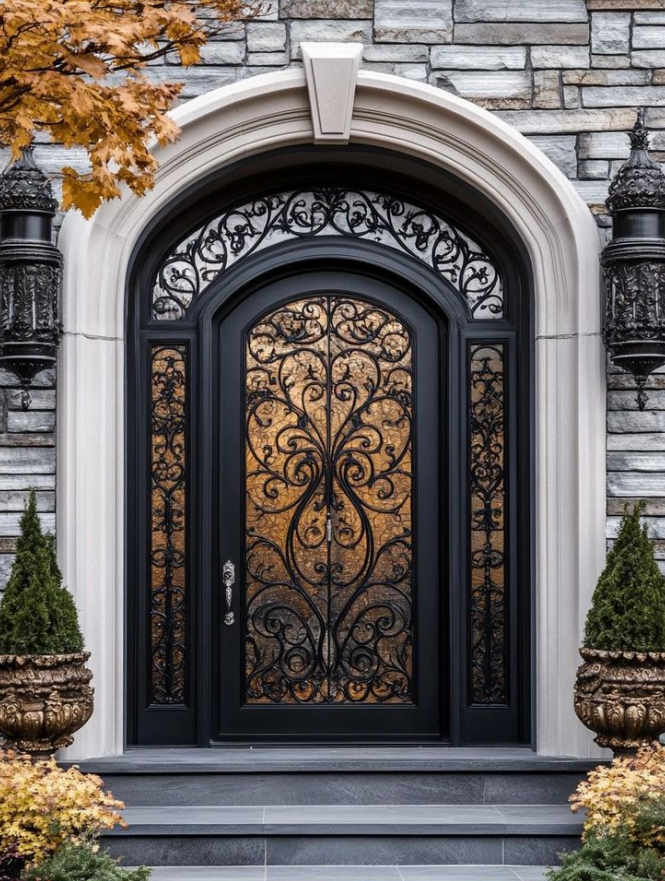
Custom iron doors really stand out as centerpieces in home design thanks to their unique decorative elements. The swirling scrollwork creates those flowing, natural shapes that look great on old fashioned mansions, whereas the sharp geometric designs work better for modern houses. With laser cutting technology, artisans can now incorporate all sorts of personalized details into the door designs. Think about family emblems or intricate leaf patterns that tell a story about who lives there. According to a recent industry report from last year, around four out of five wealthy homeowners want these kinds of custom touches because they help showcase individual taste and identity through their front entrance.
Replicating Historic Designs in Modern Iron Custom Door Fabrication
Skilled craftsmen recreate historical styles—from Victorian florals to Art Deco sunbursts—using modern forging techniques. To preserve authenticity while meeting current safety standards, hidden reinforcements like steel cores are incorporated into period-accurate designs. This fusion ensures heritage appeal without compromising durability or functionality.
Balancing Ornate Detailing with Structural Integrity and Functionality
Design complexity must support practical use:
- Weight distribution: Heavy scrollwork requires reinforced hinges
- Sightlines: Decorative cutouts should not compromise privacy
- Movement clearance: Three-dimensional elements need ½—1 gaps to avoid binding
Excessive embellishment increases production costs by 18–25% (Metalsmith Journal 2024), often with diminishing aesthetic returns.
Achieving Aesthetic Harmony with Architectural Style and Landscape Design
Coordinate iron door profiles with exterior architecture:
| Architectural Style | Ideal Door Features |
|---|---|
| Mediterranean | Arched openings + hammered textures |
| Modern Farmhouse | Rectangular panels + crossbuck motifs |
| Industrial | Clean lines + exposed rivet details |
In landscapes with dense foliage, use negative-space designs that frame views and allow natural light to pass through unobstructed.
Precision in Sizing, Configuration, and Functional Layout
Accurate measurement protocols for non-standard openings and structural settling
Getting the measurements right matters a lot when it comes to making sure installations work properly. Many experienced installers rely on laser guides these days to catch those tiny differences down to fractions of a millimeter, something that becomes really important in older structures where walls might have settled over time. Most pros know from experience that leaving at least 4mm space all around doors helps avoid problems later on. Doors tend to stick if there's no room for them to expand and contract with temperature changes throughout the seasons. This small gap makes all the difference in keeping things running smoothly even when weather takes its toll on building materials.
Door configuration options: Single, double, and sidelight integration
Options include single-door layouts for compact spaces, double doors for grand entrances, and sidelight-integrated designs to maximize daylight. Contemporary models often pair a single iron door with narrow glass panels, balancing security with visual openness.
Frame shapes and contours: Square top, arch, eyebrow, and custom profiles
Frame geometry influences both aesthetics and performance. Square tops suit modern designs, while arched or eyebrow profiles enhance Mediterranean or Victorian homes. Custom contours enable seamless integration with irregular masonry or stonework.
Swing direction and threshold integration for weatherproofing and usability
Swing orientation should account for traffic flow, wind exposure, and snow accumulation in colder regions. High-end installations feature adjustable thresholds with silicone seals that compress upon closure, forming a watertight barrier without restricting movement.
Finishes, Security, and Privacy Features in Iron Custom Door Systems
Powder Coating vs. Wet Paint: Durability, Finish Quality, and Color Matching
Powder coating delivers superior protection, offering five times greater corrosion resistance than wet paint (Metallic Coatings Institute 2024). The dry-application process creates a uniform 80—120 micron layer resistant to UV degradation and thermal stress. While wet paint provides a 20% broader color range, it demands annual maintenance in high-moisture environments.
Reinforced Framing, Hinge Placement, and Intrusion-Resistant Design
Security starts with 12-gauge steel frames and 3/16" thick door skins, which outperform standard 14-gauge materials in forced-entry resistance. Anti-tamper hinges with non-removable pins should be spaced every 18" on doors exceeding 7 feet. Recent assessments show these features reduce break-in risks by 62% compared to basic residential models.
Glass Panel Options: Tempered, Textured, Low-E, and Rain Glass for Privacy and Efficiency
Laminated tempered glass with a 1.52mm PVB interlayer meets ANSI Z97.1 safety standards and improves sound insulation by 35% over single-pane alternatives. Textured rain glass obscures visibility by up to 85% while maintaining light transmission, ideal for sidelights. Low-emissivity coatings reduce solar heat gain by 47% in warm climates (Window Performance Council 2023).
Strategic Placement of Kickplates, Lock Bores, and Handle Hardware
Stainless steel kickplates should cover the lower 18" of the door, overlapping frame seams by 0.5" to block water ingress. Multipoint lock systems perform best with bore centers at 40", 60", and 84" for balanced force distribution. Brushed nickel handles with a 30° upward tilt improve grip strength by 22% for users with limited mobility.
Collaboration and Fabrication Process for High-Quality Iron Custom Doors
Working with Designers and Blacksmiths During Concept and Prototyping Stages
Effective collaboration between clients, designers, and blacksmiths ensures design accuracy and structural integrity. Leading manufacturers conduct 3–5 iterative reviews to refine scrollwork, hardware placement, and load calculations. Digital prototyping streamlines this phase, reducing material waste by 18% compared to conventional methods.
Budget Planning and Timeline Expectations in Custom Iron Door Projects
Custom fabrication typically takes 8–12 weeks from final design approval to installation. Industry experts recommend reserving 20–25% of the budget for potential design adjustments during prototyping. Material selection can influence total cost by ±15%, underscoring the importance of clear early specifications.
Table of Contents
- Material Selection and Long Term Durability of Iron Custom Doors
- Design Customization and Aesthetic Integration for Iron Custom Doors
-
Precision in Sizing, Configuration, and Functional Layout
- Accurate measurement protocols for non-standard openings and structural settling
- Door configuration options: Single, double, and sidelight integration
- Frame shapes and contours: Square top, arch, eyebrow, and custom profiles
- Swing direction and threshold integration for weatherproofing and usability
-
Finishes, Security, and Privacy Features in Iron Custom Door Systems
- Powder Coating vs. Wet Paint: Durability, Finish Quality, and Color Matching
- Reinforced Framing, Hinge Placement, and Intrusion-Resistant Design
- Glass Panel Options: Tempered, Textured, Low-E, and Rain Glass for Privacy and Efficiency
- Strategic Placement of Kickplates, Lock Bores, and Handle Hardware
- Collaboration and Fabrication Process for High-Quality Iron Custom Doors