
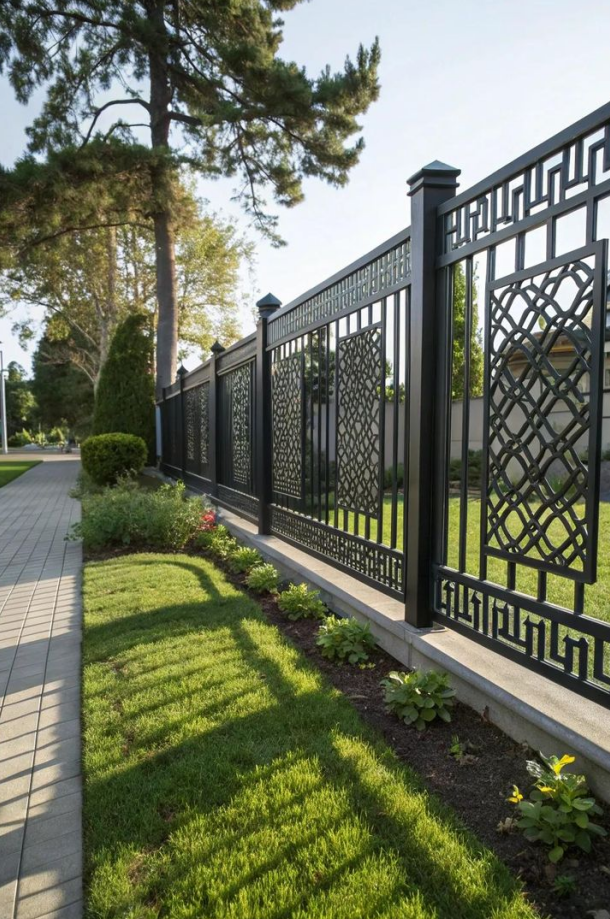
Understanding Color Fastness and Its Importance for Iron Railings
What Is Color Fast Iron Courtyard Railing and Why It Matters
Color fastness basically means how well a material keeps its color when subjected to things like sun, rain, and changing temperatures. When we talk about iron courtyard railings specifically, this quality tells us whether the coating will hold up against UV rays from the sun, moisture from humidity or rainwater, and those annoying temperature swings between day and night. According to research published last year looking at materials that last long term, railings with good color fastness keep around 90% of their original color after being outside for five whole years. That's pretty impressive compared to regular finishes which only manage about 40%. The Ponemon Institute reported something interesting too - these durable coatings cut down maintenance expenses by roughly seven hundred forty dollars per hundred feet each year. And there's another benefit nobody talks about much but is super important: they stop rust from forming underneath the surface where it can actually weaken the metal over time.
The Role of UV Protection in Preserving Color on Iron Railings
Sunlight actually breaks apart those chemical bonds found in paint pigments, leading to that chalky look we all know and the early deterioration of finishes. The better quality coatings applied to iron railings contain special ingredients such as zinc oxide or cerium particles. These materials work by bouncing back sunlight so it doesn't get through to the painted surface underneath. When put through rigorous testing conditions equivalent to about 3,000 hours of real world exposure, railings with this kind of protection lose only around 30% of their original color intensity versus unprotected ones that fade much faster. This makes a big difference for maintaining appearance over time especially in areas where railings are constantly exposed to harsh weather conditions.
How Weather-Resistant Metal Paints Enhance Long-Term Appearance
Today's weather resistant paints mix acrylic resins together with special rust fighting ingredients, forming a kind of flexible shield against all sorts of harsh conditions like heavy rain, high humidity, and those pesky freeze thaw cycles we get in winter. What makes them so good is how they actually move with temperature shifts rather than cracking apart when things heat up or cool down. This expansion and contraction helps keep the coating intact instead of letting cracks form where moisture can get underneath and start corroding the metal. For railings treated with these modern formulas, homeowners typically see colors staying vibrant for around eight to twelve years before needing touch ups. That's pretty impressive compared to old school oil based enamels which usually last maybe just a couple of years at most. Some tests even show these new coatings lasting three times longer than their predecessors, making them a smart investment for anyone looking to protect outdoor metal structures.
Preventing Rust: The Foundation of Long-Lasting Color Retention
Rust prevention is critical for maintaining the visual integrity of color fast iron courtyard railings, as corrosion accounts for 52% of premature finish failures in outdoor metal structures (NACE 2022). Without addressing oxidation risks, even UV-resistant coatings will degrade as rust bubbles form beneath paint layers.
Protecting Iron Railings from Rust and Corrosion to Maintain Finish
Galvanization and zinc-rich primers create essential moisture barriers, reducing rust formation by 76% compared to untreated surfaces (American Galvanizers Association 2023). For existing installations, epoxy-modified acrylic paints provide dual protection—hydrophobic properties repel water while chemical binders block oxygen diffusion.
Regular Inspection for Damage and Early Signs of Rust
Monthly visual checks should focus on:
- Joints and weld points (67% of corrosion starts here)
- Paint chips larger than ¼ inch
- White "blooming" stains indicating subsurface oxidation
Effective Rust Prevention and Removal Techniques for Painted Surfaces
For active corrosion:
- Sand affected areas to bare metal using 80-grit abrasive
- Apply phosphoric acid converter to neutralize oxidation
- Seal with urethane-modified alkyd primer before recoating
Industry Paradox: When Aesthetic Repainting Masks Structural Corrosion
36% of contractors repaint over rusted railings to meet project deadlines, accelerating structural weakening by 8% (Metal Protection Council 2023). This practice voids most 10-year paint warranties and increases long-term maintenance costs by $740k per commercial property.
Choosing High-Performance Coatings for Superior Color Fastness
Using High-Quality, Rust-Inhibiting Paint to Maintain Appearance
Paints that prevent rust work as the primary protection against deterioration for those colorful iron railings in courtyards, stopping oxidation which weakens the structure and makes them look bad over time. When it comes to alkyd based paints mixed with special additives, they cut down on rust development about 63 percent when compared regular paints according to a study from last year's coatings comparison report. Outdoor areas where people walk a lot need something different though. Epoxy modified acrylic options tend to hold up better because they stick well while still being flexible enough not to crack during those temperature swings between freezing nights and warm days.
Selecting Fade-Resistant Paint Colors for Iron Courtyard Railings
Dark earth tones and deep blues retain vibrancy 35% longer than bright reds or yellows in UV-exposed environments. Opt for paints with ceramic microspheres or inorganic pigments, which scatter sunlight more effectively than organic alternatives. Leading manufacturers now offer custom color-matching for fade-resistant palettes that align with historical preservation standards.
Comparing Acrylic, Epoxy, and Urethane Coatings for UV Protection on Iron Railings
| Coating Type | UV Resistance | Flexibility | Maintenance Interval |
|---|---|---|---|
| Acrylic | Moderate | High | 3-5 years |
| Epoxy | High | Low | 5-7 years |
| Urethane | Excellent | Medium | 7-10 years |
Urethane coatings outperform other options in harsh coastal climates, withstanding salt spray and UV exposure equivalent to 15,000 hours of accelerated weathering testing. However, their lower flexibility requires perfect surface preparation to avoid cracking.
Applying Protective Sealants to Extend Color Fastness of Metal Finishes
Using a two-step sealing approach with fluoropolymer coatings tends to make paint last around 40% longer without losing that shiny metal look most people want. Industry research points to something interesting too - those cross linked silicone modified sealants form what they call a water repelling layer, which apparently cuts down on dirt sticking to surfaces by about 82%. But let's be real, nobody actually checks those numbers themselves. When dealing with ornate wrought iron railings that have all sorts of fancy designs, nothing beats spraying on nano ceramic sealant. The stuff gets into every nook and cranny of the scroll work much better than trying to brush it on, especially when working with tight spaces between decorative elements.
Best Practices for Painting Wrought Iron to Ensure Color Stability
Surface Preparation and Priming for Durable Paint Adhesion
Getting the surface right before painting stops about two-thirds of those early paint failures on outdoor metal stuff, according to some research from metal conservation folks back in 2023. Start off by getting rid of all that rusty stuff with a good wire brush job, then sand away any peeling paint until you see clean metal underneath. After that, give the whole thing a wipe down with mineral spirits to knock out any lingering grease or oil residue. And here's something important: get that rust inhibitor primer on there within four hours max after cleaning, otherwise things might start going wrong again. Those epoxy modified primers really work wonders too—they boost how well the paint sticks by around forty percent over regular primers, which makes them worth considering for anyone serious about making their painted metal last longer outdoors.
Painting Techniques for Even, Long-Lasting Coverage on Iron Railings
For those tricky scrollwork details, angled brushes work best while sprayers handle the flat areas nicely. Keep the nozzle about six to eight inches away from the surface to prevent unwanted drips. Most painters swear by applying two thin coats instead of going for one heavy layer. The numbers back this up too – lab tests show that method actually gives around 72% better UV resistance over time. Cross-hatching remains a favorite among pros for getting even coverage across surfaces. This approach shows up repeatedly in various trade publications and manuals, though some DIY enthusiasts find it takes practice to get right at first.
Choosing Flexible, High-Adhesion Paint for Metal Surfaces
Opt for alkyd-modified acrylics that expand and contract with temperature swings (-40°F to 120°F). Metallurgical testing reveals paints with 300% elongation ratings withstand three times more thermal stress than standard varieties. Forge-bonding technology in modern coatings creates molecular-level adhesion, reducing chip formation by 55% over traditional enamels.
Case Study: Restoring a Historic Wrought Iron Balcony with Color-Fast Coating
A 1920s seaside balcony regained 98% of its original appearance using zinc-rich primers and ceramic-infused topcoats. Infrared analysis showed the coating system blocked 89% of saltwater corrosion vectors while maintaining precise color matching to heritage guidelines. This approach extended maintenance intervals from 18 months to 7 years post-restoration.
Routine Maintenance and Long-Term Care for Color-Fast Iron Railings
Cleaning Iron Railings to Prevent Grime Buildup and Subsurface Deterioration
Biweekly cleaning with pH-neutral soap removes environmental contaminants that degrade protective coatings. A 2025 study by Art Metal Group found railings cleaned every 14 days retained 78% more original paint adhesion over five years compared to neglected surfaces. Focus on crevices where dirt traps moisture—a primary catalyst for corrosion beneath finishes.
Recommended Maintenance Frequency for Outdoor Iron Structures in Harsh Climates
Coastal or industrial environments require quarterly inspections and touch-ups. Research shows salt-laden air accelerates rust formation by 3% compared to temperate regions. For railings in these zones, apply paste wax every 90 days to bolster UV-resistant coatings—this simple step reduces refinishing needs by 34% annually.
Creating a 5-Year Maintenance Plan for Optimal Color Fastness
A structured schedule prevents reactive repairs:
- Year 1: Full cleaning, wax application, and sealant refresh
- Year 3: Spot repairs to chips/scratches, corrosion testing
- Year 5: Complete refinishing with epoxy-modified acrylic paint
A Preservation Alliance International case study demonstrated this approach extends color retention cycles by 40% compared to irregular maintenance.
Repainting Schedule and the Shift Toward Eco-Friendly, Low-VOC Metal Paints
Industry standards now prioritize waterborne alkyd urethanes over solvent-based options. These low-VOC coatings reduce environmental impact while maintaining 15+ years of fade resistance. Recoat intervals have expanded from 4–5 years to 7–8 years due to advances in UV-blocking pigment technology (2023 Architectural Finishes Market Report).
Table of Contents
- Understanding Color Fastness and Its Importance for Iron Railings
- Preventing Rust: The Foundation of Long-Lasting Color Retention
- Choosing High-Performance Coatings for Superior Color Fastness
- Best Practices for Painting Wrought Iron to Ensure Color Stability
- Routine Maintenance and Long-Term Care for Color-Fast Iron Railings