
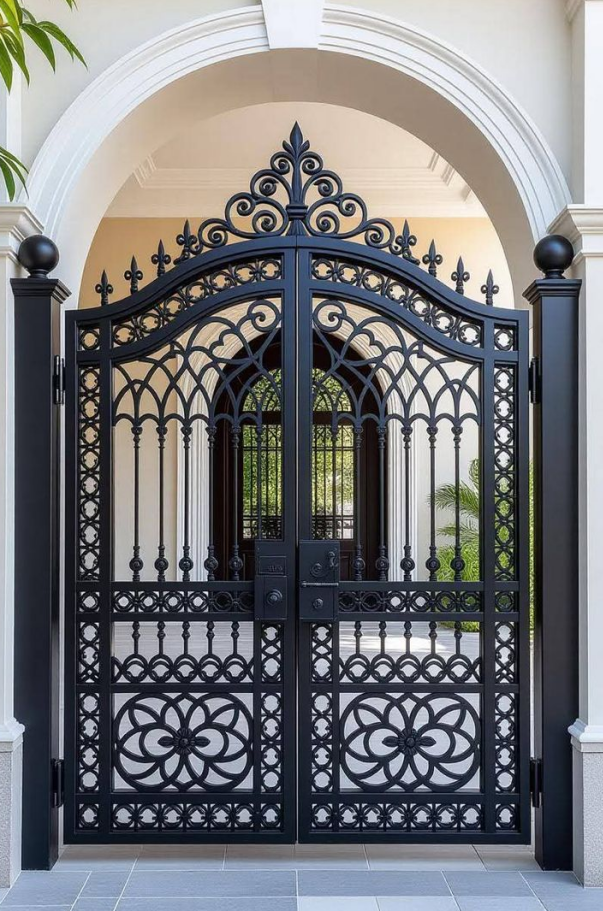
Why Reinforced Hinges Are Critical for Iron Courtyard Door Security
Rising Demand for Security-Oriented Door Hardware in Residential Areas
Burglaries where criminals force their way through doors jumped by about 23% last year according to FBI data, which has made people start looking at stronger hinges for their courtyard doors. Most homeowners are now going for hinges that have those anti-pry plates and multi-point locks because regular door hardware just doesn't stand up to what thieves use these days, especially those big hydraulic jacks. The National Crime Prevention Council did a survey in early 2024 and found something interesting: around two thirds of security experts actually suggest fixing the hinges first rather than just bolting on heavier door panels.
How Reinforced Hinges Prevent Forced Entry and Improve Structural Integrity
Reinforced hinges combat forced entry through three key mechanisms:
| Feature | Standard Hinges | Reinforced Hinges |
|---|---|---|
| Material Thickness | 1.2–1.5 mm steel | 3–5 mm hardened steel |
| Pin Security | Removable pins | Non-removable pins (NRP) |
| Load Capacity | 90–120 lbs per hinge | 250–400 lbs per hinge |
By distributing weight evenly, reinforced hinges prevent door sagging—a common vulnerability that intruders exploit to bypass locks. According to the 2025 Security Hardware Report, doors equipped with security-grade hinges withstand up to three times longer prying attempts than those with standard hinges.
Case Study: Burglary Resistance in Homes Using Reinforced Hinge Iron Courtyard Doors
A two-year study of 220 homes in coastal Florida showed a 61% reduction in successful forced entries after installing ASTM F2280-certified hinges on wrought-iron courtyard doors. Properties using three or more reinforced hinges per door experienced zero hinge-related breaches, even under hurricane-force winds and prolonged corrosion stress.
Evaluating the Strength and Load Capacity of Reinforced Iron Door Hinges
Matching Hinge Strength to Iron Door Weight and Size Requirements
The reinforced hinges need to be properly matched with both the weight and dimensions of the door if we want reliable structural support. Take a standard 100 pound wrought iron courtyard door for instance it makes sense to install hinges capable of handling around 150 pounds when considering factors like wind pressure and regular usage over time. When dealing with bigger commercial doors that weigh more than 300 pounds, going for oversized pins along with ball bearing pivots becomes absolutely necessary. Industry professionals generally follow several important principles when selecting hardware for heavy duty applications.
- Residential doors: 150–300 lb capacity hinges with 0.18" thick leaves
- Commercial gates: 400–500 lb capacity hinges with ball-bearing pivots
Engineering Standards for Heavy-Duty Hinges: ASTM and NFPA Load-Bearing Guidelines
The industry has set clear benchmarks for how well hinges perform when put through their paces in actual usage scenarios. According to ASTM F2282-03, regular home hinges need to last through around half a million open-close cycles before showing wear. Meanwhile, the NFPA 80 standard demands that fire rated hinges can hold up to almost double what a door actually weighs, and keep doing so without fail. Real world testing reveals something interesting too: reinforced hinges only bend less than half a degree when subjected to weights of about 450 pounds. That's roughly three times better than what we see from ordinary hinges on the market today, which means they stay stable much longer without sagging or warping over time.
Lifespan Comparison: Standard vs. Reinforced Hinges Under Continuous Stress
Reinforced hinges outperform conventional ones by 8–12 years in outdoor environments. Mild steel hinges begin degrading within 18 months of daily use, whereas galvanized reinforced versions remain functional for over a decade. Stress testing reveals significant durability advantages:
| Metric | Standard Hinges | Reinforced Hinges |
|---|---|---|
| Cycle endurance | 100,000 cycles | 500,000+ cycles |
| Corrosion onset | 6–12 months | 5–8 years |
| Load-bearing loss | 40% after 2 years | <10% after 5 years |
An industry study from 2023 found that 83% of failed courtyard door incidents stemmed from undersized hinges, underscoring the importance of proper load matching.
Material Quality and Weather Resistance in Reinforced Hinge Performance
High-Grade Materials Used in Durable Reinforced Hinge Construction
Good quality reinforced hinges need to handle both strength and weather resistance. Most top performers today are made from stainless steel like grades 304 or 316, or carbon steel covered with carbon fiber reinforced polymer (CFRP) coatings. These materials give them impressive strength ratings, usually over 550 MPa when tested. A recent paper from structural engineers in 2024 showed something interesting about CFRP coated steel joints. After going through 5,000 stress tests, they kept around 94% of their original load capacity. That's actually 37% better performance compared to regular hinges without such reinforcement. Plus, these special hinges can stand up to pretty heavy forces before bending, somewhere around 1,100 pounds worth of pressure before showing any real signs of wear.
Longevity of Reinforced Hinges in Harsh Outdoor Conditions
How products perform when exposed to harsh weather conditions really comes down to what kind of material treatment they've received. Take galvanized steel hinges for instance. When put through salt spray tests following ASTM B117 standards, these hinges can withstand corrosion for around 1,500 hours. That's actually three times longer than regular untreated steel would last before showing signs of rust. For outdoor applications where sun exposure is a concern, polyester powder coatings make a big difference too. They cut down on UV damage by roughly 80 percent compared to traditional enamel finishes. What happens when temperatures swing wildly between -30 degrees Fahrenheit and 120 degrees? The good news is that reinforced hinges don't change shape much at all. We're talking just 0.2 millimeters of dimensional shift, which means they keep working properly without needing adjustments. Real world testing has shown something interesting as well. After sitting out near the coast for 18 whole months, reinforced steel joints still held onto about 89% of their initial strength. So whether it's humidity or salty sea air, these materials stand up pretty well against nature's challenges.
Corrosion Resistance and Maintenance Needs for Iron Courtyard Door Hinges
| Factor | Standard Hinges | Reinforced Hinges |
|---|---|---|
| Annual Maintenance | 4-6 cleanings | 1-2 cleanings |
| Lubrication Frequency | Monthly | Biannually |
| Replacement Cycle | 3-5 years | 12-15 years |
Reinforced hinges incorporate self-lubricating bushings and hydrophobic seals, reducing dirt ingress by 70%. Zinc-aluminum alloy coatings (ASTM A653) provide sacrificial protection against rust, extending service life beyond a decade—even in acid rain zones. With quarterly inspections and silicone-based lubricants, long-term ownership costs drop by 62% compared to standard hardware.
Real-World Applications: Residential vs. Commercial Use of Reinforced Hinges
Heavy-Duty Hinges in Exterior Security Installations: Gate and Courtyard Door Examples
Heavy duty reinforced hinges really shine when installed on things like iron gates and courtyard doors that get constant use. For homes, these hinges can hold up decorative gates weighing around 300 pounds and also stand up against break-ins. Burglars actually go after weak door hardware in about one third of cases according to crime prevention data from 2023. Businesses need something even tougher though. That's why commercial properties often install ASTM certified hinges that last through over half a million opening and closing cycles. These meet both the heavy foot traffic demands and strict building regulations. Some recent testing in 2023 showed that gates with these stronger hinges required way less maintenance in beachfront locations where salt air would normally eat away at regular hinges. Maintenance costs dropped nearly 60% in those coastal areas because the hinges just don't wear out as fast.
Comparing Reinforced Hinge Performance Across Residential and Commercial Settings
Both residential and commercial applications get their benefits, but when it comes to commercial installations, the requirements jump several notches. Commercial grade hardware needs to stand up to much heavier loads and pass stricter certification tests. Take door hinges as an example residential ones generally work fine for doors weighing between 200 to 400 pounds, usually made with 3/16 inch steel plates. The commercial versions tell a different story though they're built with thicker 1/4 inch steel and can handle well over 600 pounds. This extra strength isn't just for show either these hinges must satisfy fire safety ratings and accessibility standards set by the Americans with Disabilities Act. For those working on public buildings or institutions, ANSI Grade 1 hinges are practically mandatory. These bad boys deliver around 65% more shear strength compared to what's found in residential settings, which makes them essential for places where failure simply isn't an option.
Integration of Reinforced Hinges in Modern Security-Focused Architectural Designs
Many architects are starting to build reinforced hinges right into their structural designs so security doesn't clash with good looks. According to some recent research from last year, around seven out of ten homes focused on security actually have these hidden reinforced hinges installed. They work pretty well against tampering while still keeping the overall appearance intact. The trend fits what most experts recommend nowadays about hiding those pivot points and adding anti-lift features especially near entry points that face higher risks.
Choosing the Right Reinforced Hinge for Your Iron Courtyard Door
Assessing Threat Levels and Selecting Appropriate Hinge Reinforcement
Looking at how risky a property actually is should be step one for anyone concerned about security. Urban dwellings get broken into about three times as often as those out in the countryside according to last year's Door Security Report. For places where crime rates are higher, going for hinges with those thick 9.5mm stainless steel pins makes sense. The ones with anti-spread plates work best because they spread out the force when someone tries to kick or ram through the door. Some tests done recently showed pretty impressive results too. Homes equipped with these reinforced hinges saw their chances of being successfully burgled drop by around 74% compared to regular old hardware on the market today.
Avoiding Common Pitfalls: Lightweight Hinges vs. True Security-Grade Reinforcement
Many homeowners sacrifice strength for appearance. Genuine security-grade hinges deliver measurable advantages:
| Feature | Standard Hinge | Reinforced Hinge |
|---|---|---|
| Material Grade | ASTM A36 Steel | ASTM A653 Grade 80 Steel |
| Pin Diameter | 6.35mm | 9.5mm |
| Load Capacity | 45kg | 136kg |
| Anti-Tamper Features | Basic screws | Security-capped fasteners |
Key Buying Criteria: Material, Certification, and Installation Best Practices
When selecting door hardware, go for those hinges that carry the ANSI/BHMA A156.7 Grade 1 certification. These need to survive around half a million opening and closing operations before showing wear. For doors measuring about 2.4 meters tall, follow what's called the three point rule. Put extra hinges somewhere in the middle so each section between them is roughly 800 millimeters long. Never forget to match these stronger hinges with proper bolts and screws at least 12mm thick. And don't overlook regular maintenance either. Check those hinge pins and bushings every three months or so to keep everything running smoothly without unexpected failures down the road.
Table of Contents
- Why Reinforced Hinges Are Critical for Iron Courtyard Door Security
- Evaluating the Strength and Load Capacity of Reinforced Iron Door Hinges
- Material Quality and Weather Resistance in Reinforced Hinge Performance
- Real-World Applications: Residential vs. Commercial Use of Reinforced Hinges
- Choosing the Right Reinforced Hinge for Your Iron Courtyard Door